2026 Global Second Hand Clothing Market Trends You Should Know
The global second-hand clothing market has officially moved beyond niche thrift status to become a dominant force in the global fashion economy. Valued at approximately USD 241.6 billion in 2026, the industry is projected to grow at a compound annual growth rate (CAGR) of 9.0% through 2033, outpacing the growth of new apparel retail by nearly 2-to-1.
For wholesale buyers, importers, and industry partners, understanding the shifting landscape is critical to sourcing the right inventory and capturing market share. Below are the defining trends shaping the used clothing industry in 2026.
1. Resale Goes Mainstream: 10% of Global Fashion Spending
Second-hand apparel now accounts for 10% of total global fashion spending, marking a historic milestone for the industry. What was once driven primarily by cost-saving is now a standard shopping habit across all income levels.
- Gen Z and Millennial Dominance: These demographics are expected to drive approximately 70% of market growth through 2030, prioritizing uniqueness, sustainability, and value over fast-fashion novelty.
- Shift in Consumer Mindset: Nearly half of global shoppers now check second-hand platforms before buying new items. This behavioral shift guarantees long-term, structural demand for quality pre-owned garments.
Implication for Buyers: Demand is no longer limited to low-grade basics. Premium, curated, and on-trend used clothing is moving faster than ever.
2. Quality Grading & Curation Replace Bulk Commodity Selling
The era of unsorted “bales of mystery” is fading fast. Buyers worldwide are increasingly selective, demanding clear grading standards and specific category ratios.
- Rise of Grade A Premium: High-quality, stain-free, and on-trend Grade A used clothes command significantly higher margins and sell through faster in both African and Southeast Asian markets.
- Vintage and Retro Explosion: Vintage denim, workwear, Y2K styles, and branded streetwear are experiencing explosive growth, especially in Southeast Asia (Philippines, Thailand) and Eastern Europe. Sourcing curated vintage bales has become a major competitive advantage.
- Specialized Categories: Performance wear (yoga leggings, sports jerseys), branded sneakers, and children’s clothing remain top-performing, high-turnover categories.
3. Regional Demand Profiles Are Diverging
Not all markets buy the same inventory. Successful importers in 2026 are tailoring their bale composition to local consumer preferences.
Africa: Volume + Durability + Value
Countries like Nigeria, Kenya, and Ghana remain the largest volume markets. Buyers here prioritize:
- Durable fabrics and construction
- Mixed summer wear with practical everyday styles
- Children’s clothing and ladies’ fashion with fast sell-through rates
- Clear Grade A / Grade B pricing tiers
Southeast Asia: Style + Brand + Aesthetic
Markets such as Thailand, the Philippines, and Malaysia are driven by social media trends:
- Strong demand for branded sneakers (Nike, Adidas, Converse) and vintage denim
- Preference for smaller sizes (S/M) and Korean/Japanese style silhouettes
- Vintage aesthetics and unique statement pieces outperform basic staples
4. AI and Technology Are Reshaping the Supply Chain
Artificial intelligence is no longer just for retail platforms—it is transforming the entire supply chain from sorting to discovery.
- AI-Powered Sorting: Leading suppliers are adopting AI-assisted grading systems to improve consistency, reduce human error, and sort items by style, brand, and condition at scale.
- Digital Discovery: Over 50% of buyers now discover suppliers and products through digital channels and social feeds rather than traditional trade shows.
- Transparency Tools: Digital product passports and traceability systems are gaining traction, particularly as EU regulations around textile circularity tighten.
5. Circular Economy Moves from Buzzword to Regulation
Sustainability is no longer just a marketing point—it is becoming a regulatory and commercial requirement.
- EU Policy Drivers: The EU’s Ecodesign for Sustainable Products Regulation (ESPR) is banning the destruction of unsold textiles, pushing billions of garments into reuse and recycling channels instead of landfills.
- Brand-Led Recommerce: Major brands from Zara to Levi’s are launching official take-back and resale programs, normalizing second-hand shopping and expanding the overall supply pool of quality used garments.
- Supply Becomes the New Constraint: As demand accelerates, securing a consistent, high-quality supply of sorted used clothing is becoming the biggest competitive barrier. Reliable, established suppliers with strong domestic collection networks are more valuable than ever.
What This Means for Your Business in 2026
To win in the 2026 market, wholesale buyers should focus on three priorities:
- Partner with a supplier that offers clear, consistent grading standards to reduce waste and improve sell-through.
- Diversify your product mix with high-margin categories such as vintage pieces, branded shoes, and premium Grade A summer wear.
- Source from a factory with stable supply capacity to avoid stock shortages as global demand continues to surge.
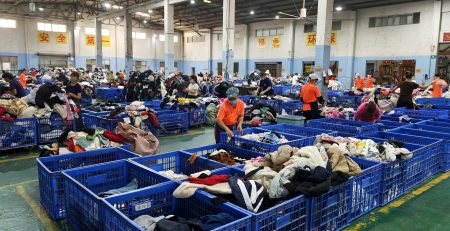
At Yonglijia, we operate a full-scale sorting facility in Huizhou, China, supplying graded used clothing, shoes, and bags to importers across Africa, Southeast Asia, and beyond. Our strict quality control, flexible bale customization, and reliable container shipping make us the trusted partner for growing second-hand businesses worldwide.
Ready to source high-quality used clothing bales for your market?
Contact us via WhatsApp: +86 15900112000 or email admin@usedclothesforsale.cn for a free quote and product catalog.